Aubergine & hummus grills
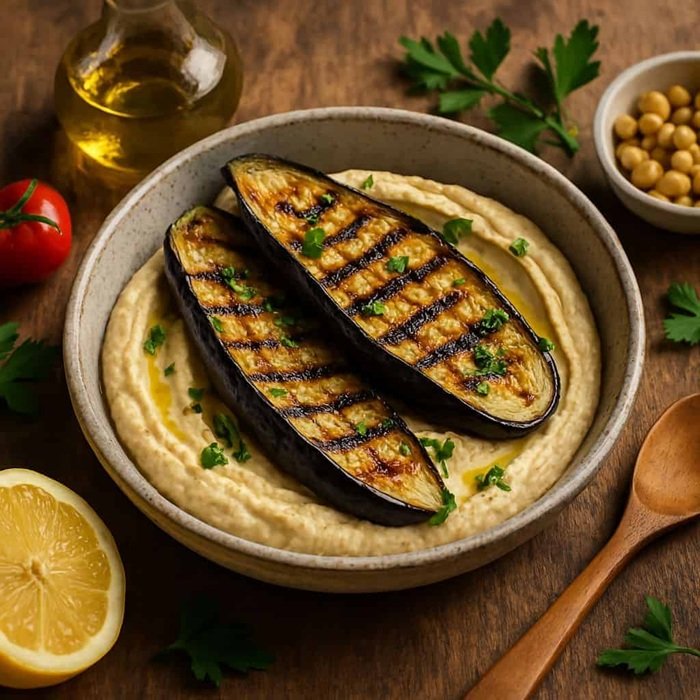
Adapted from TheMealDB
Ingredients
Affiliate Product links go to Amazon. As an Amazon Associate, Captain Rico earns from qualifying purchases.
- 2 Aubergine
- 2 Tbsp applesauce
- 3 sliced thinly Bread
- 10½ oz Hummus
- 3½ oz Walnuts
- 1½ oz Parsley
- 7 oz Cherry Tomatoes
- Juice of 1/2 Lemon
- Splash vegetable broth 🛒
Method
- Lay the aubergine out in one layer on a large baking sheet.
- Brush sparingly with applesauce, then season generously. (WFPB: drizzle with broth, sauce, or a splash of vinegar instead of oil)
- Grill for 15 mins, turning twice and brushing with oil until the slices are softened and cooked through. (WFPB: grill without oiling; the food releases when seared)
- Meanwhile, whizz the bread into crumbs.
- Add 2 tsp oil and whizz briefly again, to coat.
- Spread a couple of tsps of hummus on top of each slice of aubergine.
- Tip the breadcrumbs onto a large plate, then press the hummus side of the aubergines into the crumbs to coat.
- Grill again, crumb-side up, for about 3 mins until golden. (WFPB: grill without oiling; the food releases when seared)
- Toss the walnuts, parsley and cherry tomatoes in a bowl, season, then add the lemon juice and olive oil and toss again.
- Serve the grills with the salad, a dollop more hummus and some pitta bread.
Nutrition per serving (estimated)
- 132 cal
- 4.2g protein
- 8g fat
- 13.1g carbs
- 3.8g fiber
- 2.7g sugar
- 107mg sodium
About the ingredients
- Aubergine Solanum melongena
- Botanical/culinary mismatch flagged: eggplant is a berry botanically, used as a vegetable.
- applesauce Malus domestica
- Commercial sweetened versions exist but added sugar must be label-disclosed; the named ingredient is just cooked apples.
- Bread Triticum aestivum
- Stale bread is ordinary bread dried out by age; not a distinct ingredient. Bread is a baked composite of (typically refined) flour, water, yeast and salt. Refined grain plus added salt make standard bread noncanonical; only 100% whole-grain, salt-free loaves would qualify.
- Hummus Cicer arietinum
- Hummus: Levantine dip/spread of mashed cooked chickpeas (Cicer arietinum) blended with tahini (sesame), lemon juice, garlic, salt. Minimally processed whole-food composite, high protein/fiber, iron, folate. WFPB-canonical when oil-free; commercial versions often add olive oil.
- Walnuts Juglans regia
- Name itself is an oil (isolated fat). Even cold-pressed walnut oil retains omega-3 ALA but the food matrix and fiber are gone; pure lipid. Noncanonical regardless of extraction method.
- Parsley Petroselinum crispum
- Fresh leafy herb in the carrot family; flat-leaf (Italian) and curly types. Eaten raw or added late as garnish/aromatic. Whole leaf and stem, no processing. Rich in vitamin K, C, A, folate. Whole plant — fully WFPB canonical.
- Cherry Tomatoes Solanum lycopersicum var. cerasiforme
- Small round tomato variety, the form closest to the wild ancestral tomato of the Andes. Whole fruit (culinary vegetable) eaten raw or cooked. Rich in lycopene, vitamin C, potassium. Unprocessed, WFPB-canonical.
- Lemon Citrus limon
- Lemon is the acidic tree fruit (hesperidium) of Citrus limon, a Rutaceae shrub of likely Northeast Indian origin. Eaten as fresh fruit, juice, and zest. Rich in vitamin C, citric acid, flavonoids. Whole fruit and its fresh juice are canonical WFPB foods.
- vegetable broth
- A salt-free, all-purpose vegetable broth. Onion, carrots, celery, garlic, tomatoes, mushrooms, kombu, parsley.