Beef Mandi
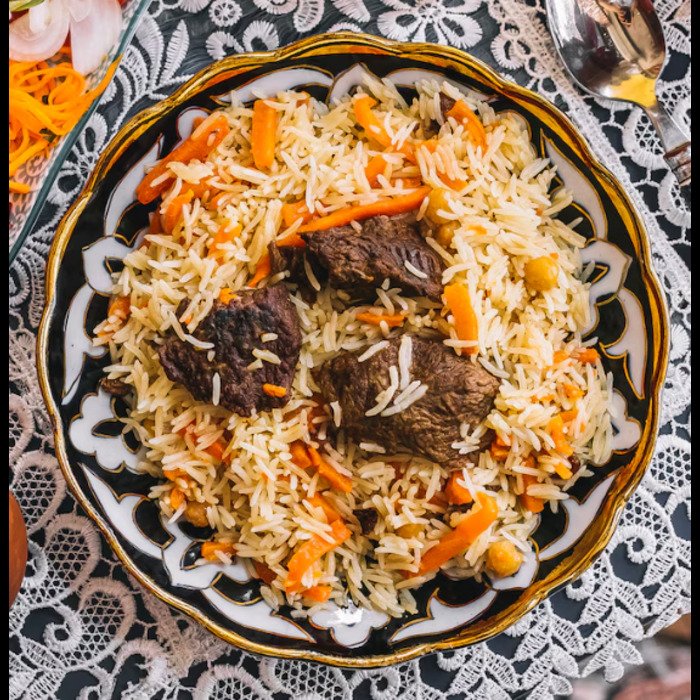
Adapted from TheMealDB
Ingredients
Affiliate Product links go to Amazon. As an Amazon Associate, Captain Rico earns from qualifying purchases.
- 2¼ lb Basmati Rice
- 5 cup mushroom stock
- 2 medium Onion
- 5 chopped cloves Garlic
- 2 Green Chilli
- 1 small Tomato
- 2½ tsp Salt
- 3 Tbsp vegetable broth 🛒
- 1½ tsp Turmeric Powder
- ½ tsp Cardamom
- ½ tsp Cloves
- ½ tsp Bay Leaf
Method
- Wash the beef and cut into large pieces. Season lightly with salt and turmeric.
- Heat ghee/vegetable broth in a large pot. Add sliced onions and sauté until light golden.
- Add garlic, green chilies, and tomato; cook until softened.
- Add the mandi spice mix: coriander, cumin, black pepper, cinnamon, cardamom, cloves, and bay leaves.
- Add beef pieces and stir on medium heat until the meat is well coated with spices.
- Pour in water or mushroom stock. Cover and simmer until beef is tender (about 1.5–2 hours depending on cut).
- Remove beef carefully and set aside. Strain and measure the broth.
- Add washed, soaked basmati rice to the broth (usually 1 cup rice = 1.5–2 cups liquid).
- Adjust seasoning and bring to a boil.
- Lower heat, cover, and cook the rice until fluffy.
- Place the beef pieces over the rice and steam on low heat for 10 minutes so flavors combine.
- Optional: For smoky flavor, place a small hot charcoal on foil in the pot, add 1 tsp butter/vegetable broth, immediately cover for 5 minutes.
- Remove coal before serving.
- Fluff rice and serve beef mandi with salad or chutney.
Nutrition per serving (estimated)
- 466 cal
- 10.9g protein
- 2.3g fat
- 93.9g carbs
- 4.3g fiber
- 1.5g sugar
- 5400mg sodium
About the ingredients
- Basmati Rice Oryza sativa
- Aromatic long-grain rice landrace from the Indian subcontinent, cultivated for centuries in the Himalayan foothills. The grain (caryopsis) of Oryza sativa; available whole-grain (brown) or milled (white). As named, a whole cereal grain — canonical. Carbohydrate-dominant, supplies manganese, magnesium, B vitamins.
- mushroom stock
- Savory liquid made by simmering mushrooms with aromatic vegetables in water; commercial and most recipe forms include added salt, making it noncanonical. The base extraction is a flavor broth, not a whole food.
- Onion Allium cepa
- Bulb vegetable, eaten raw or cooked. Whole minimally-processed plant food; 'organic' refers to cultivation only. WFPB-canonical.
- Garlic Allium sativum
- Garlic itself is canonical, but extract denotes a concentrated/isolated derivative outside the whole-food canon. Marketed as natural/healthy supplement, hence mistaken-as-WFPB flag.
- Green Chilli Capsicum annuum
- Fresh green (unripe) chili pepper, the New Mexico/Hatch-style pod widely roasted and chopped in Southwestern cooking. Whole fruit of Capsicum annuum, eaten skin and flesh. Minimally processed (roasted/chopped). WFPB-canonical whole vegetable-fruit.
- Tomato Solanum lycopersicum
- Whole fruit of the tomato plant (botanically a berry, culinary vegetable). 'Organic' denotes a farming method, not a distinct ingredient. Raw whole fruit, rich in lycopene, vitamin C, potassium. WFPB-canonical.
- Salt NaCl
- Crystalline sodium chloride, harvested by evaporating seawater or mining rock-salt deposits. Used as seasoning and preservative since antiquity—central to trade and food economies for millennia. A mineral, not a plant food, and a sodium isolate; noncanonical to WFPB.
- vegetable broth
- A salt-free, all-purpose vegetable broth. Onion, carrots, celery, garlic, tomatoes, mushrooms, kombu, parsley.
- Turmeric Powder Curcuma longa
- Cúrcuma is the Spanish/Portuguese name for turmeric—the dried, ground rhizome of Curcuma longa. Whole-food spice (root), source of curcumin. Minimally processed: boiled, dried, milled. Canonical.
- Cardamom Amomum subulatum
- Distinct from green cardamom (Elettaria cardamomum). The smoky aroma comes from traditional fire-drying, a method not an additive. Used whole pod or seeds in savory dishes.
- Cloves Syzygium aromaticum
- Dried aromatic flower bud of a tropical evergreen tree, used whole or ground as a warm pungent spice. Whole-food spice rich in eugenol essential oil, manganese, and antioxidants. WFPB canonical.
- Bay Leaf Laurus nobilis
- Bay leaf: aromatic leaf of the laurel tree Laurus nobilis, native to the Mediterranean and prized since antiquity (Greek/Roman symbolism). Used whole, dried or fresh, to infuse dishes then removed. Contains essential oils (eucalyptol). A whole dried herb/leaf. Canonical WFPB.