CAPTAIN RICO · FIELD NOTES
Repairs, Radio and Everyday Projects: The Gear That Had a Job to Do
A garage-door belt, salt-worn patio handles, a Raspberry Pi radio setup and an automation-ready camera: practical notes from my own projects.
Affiliate disclosure: As an Amazon Associate I earn from qualifying purchases. Product links in this article are affiliate links.
The food in my order history tells one story. The hardware tells another: something needed fixing, or I wanted to understand a system well enough to make it useful. Those are very different reasons to buy a product, but both are more interesting to me than collecting gadgets with no job to do.
A belt that fit the existing garage-door opener
The replacement garage-door opener belt was a perfect fit in our setup. Replacing that part helped keep the existing door-opening system in service. I can’t turn that into a universal fit claim or a measured estimate of extra years; it is the result we got with our equipment.
The lesson is to start with the existing opener’s model, door height and specified belt assembly. A familiar-looking listing isn’t enough. This is a purchase note, not an installation tutorial.
Replacing handles the salt had beaten up
The PGT sliding patio-door exterior handles were also a perfect fit for replacing our salt-beaten ones. That is a small repair, but it is exactly the sort of result I want from replacement hardware: the right part for the door already there.
My fit result applies to my door. Check the existing handle’s measurements, mounting points and configuration before ordering for yours. I am not claiming that the replacement has proved immune to coastal corrosion.
The headlight kit worked—and preparation mattered
The CERAKOTE headlight restoration kit worked for us, but we should have sanded more. That is the part of the experience worth passing along. A product can help and still leave you with a clear lesson about the preparation.
The manufacturer’s instructions include a staged preparation and sanding process before the coating. Follow those current directions for your kit and lens condition rather than treating “sand more” as an unlimited instruction. I don’t have a measured light-output result or a long-term durability verdict to add.
A Pi, two receivers, and signals from boats and aircraft
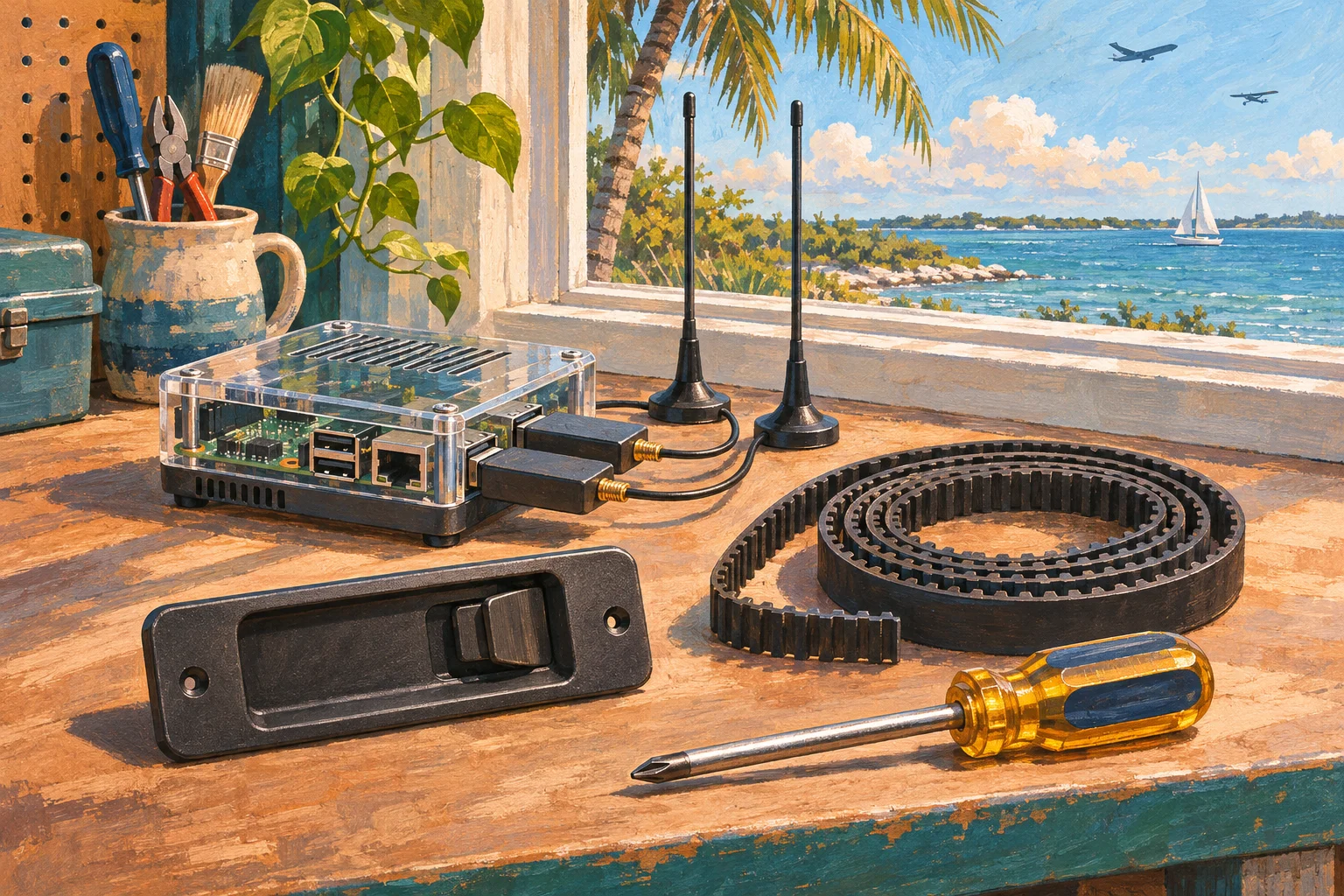
My Raspberry Pi 5 kit and two Nooelec receivers are set up for AIS and ADS-B. The order references are the NESDR Mini receiver and NESDR Smart receiver bundle; match the current listing and hardware revision before buying.
AIS is the maritime Automatic Identification System. ADS-B is Automatic Dependent Surveillance–Broadcast, used in aviation. The Coast Guard and FAA explain the underlying systems; my home receiver project listens to broadcasts and turns them into useful data. It is not a substitute for certified navigation equipment or a claim that every vessel and aircraft will be visible.
A read-only check on November 21, 2026 found two attached RTL2838 USB receivers and running AIS-catcher, readsb and PiAware services. A fresh ADS-B statistics file showed incoming messages. That verifies active ADS-B reception and running AIS software; it does not independently establish fresh decoded vessel traffic. The Pi was connected over 5 GHz Wi-Fi, but the check did not establish which access point it was using or measure an EAP610 improvement.
A camera with room for automation
The Reolink camera was a perfect fit for an AI-based project because it could be automated. That is my reason for choosing it. A camera’s usefulness in a project depends on the controls and interfaces you actually need, not just its headline resolution.
The TP-Link EAP610 access point is a different case: I am still evaluating it. I won’t give it a finished verdict just because it appears in my orders. The sensible question is whether it improves the network where the project actually runs.
References and next steps
For how I separate a proven fit from a work in progress, read what earned its place—and what I’m still evaluating.