Light Vegetable Broth
A salt-free, all-purpose vegetable broth. Onion, carrots, celery, garlic, tomatoes, mushrooms, kombu, parsley.
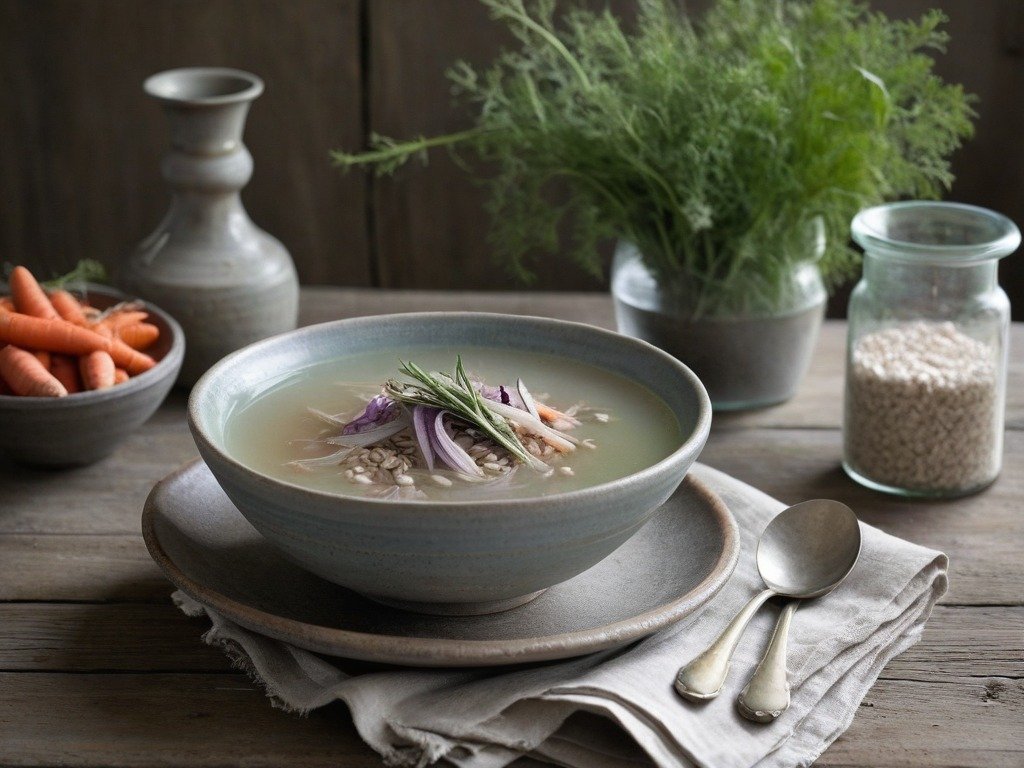
Ingredients
Affiliate Product links go to Amazon. As an Amazon Associate, Captain Rico earns from qualifying purchases.
- 1 red onion , coarsely chopped
- 2 carrots , cut into 1-inch pieces
- 2 celery ribs , coarsely chopped
- 3 garlic cloves , crushed
- 2 Roma tomatoes , cored and halved
- 2 dried shiitake mushrooms
- 1 piece of kombu , 2-inch; dried sea vegetable (optional)
- ½ cup fresh parsley , coarsely chopped parsley
- 2 bay leaves
- 1 ⁄2 teaspoon ground black pepper
- 2 Tbsp white miso paste
- Dr. Greger’s Special Spice Blend
Method
- Heat 1 cup of water in a large pot over medium heat.
- Add the onion, carrot, celery, and garlic. Cook 5 minutes.
- Stir in the tomatoes, mushrooms, kombu, parsley, bay leaves, ground black pepper, and remaining water (8 cups total).
- Simmer 30 minutes.
- Remove from heat. Discard the kombu.
- Transfer to a blender and blend until smooth. Strain through a fine-mesh sieve, then whisk in the miso paste until dissolved.
- Cool to room temperature, then store in containers in the refrigerator or freezer.
Nutrition per serving (estimated)
- 65 cal
- 2g protein
- 1.6g fat
- 10.9g carbs
- 3.4g fiber
- 2.4g sugar
- 266mg sodium
About the ingredients
- red onion Allium cepa
- Purple-red cultivar of common onion; bulb eaten raw or cooked. Minimally processed. Anthocyanins, quercetin, organosulfur compounds, vitamin C. Whole-plant bulb — canonical WFPB.
- carrots Daucus carota
- Whole taproot, eaten raw or cooked. Orange domesticated form is the familiar one; heirloom landraces range purple to white.
- celery ribs Apium graveolens
- Crisp, fibrous leaf stalks (petioles) of Apium graveolens, eaten raw or cooked. Very low caloric density, high water and fiber; provides vitamin K, folate, potassium. Whole, intact vegetable, fully canonical to WFPB.
- garlic cloves Allium sativum
- Garlic itself is canonical, but extract denotes a concentrated/isolated derivative outside the whole-food canon. Marketed as natural/healthy supplement, hence mistaken-as-WFPB flag.
- Roma tomatoes Solanum lycopersicum
- Whole fruit of the tomato plant (botanically a berry, culinary vegetable). 'Organic' denotes a farming method, not a distinct ingredient. Raw whole fruit, rich in lycopene, vitamin C, potassium. WFPB-canonical.
- dried shiitake mushrooms Lentinula edodes
- Fresh whole edible mushroom widely used in East Asian cooking. Rich in B vitamins, copper, selenium, and beta-glucans; umami-dense. Whole unprocessed fungus. Canonical whole food.
- piece of kombu Saccharina japonica
- Edible kelp (brown seaweed) dried in sheets, used in Japanese cooking and dashi; whole sea vegetable rich in iodine, glutamate, fiber, minerals. Minimally processed (dried). WFPB canonical.
- fresh parsley Petroselinum crispum
- Fresh leafy herb in the carrot family; flat-leaf (Italian) and curly types. Eaten raw or added late as garnish/aromatic. Whole leaf and stem, no processing. Rich in vitamin K, C, A, folate. Whole plant — fully WFPB canonical.
- bay leaves Laurus nobilis
- Bay leaf: aromatic leaf of the laurel tree Laurus nobilis, native to the Mediterranean and prized since antiquity (Greek/Roman symbolism). Used whole, dried or fresh, to infuse dishes then removed. Contains essential oils (eucalyptol). A whole dried herb/leaf. Canonical WFPB.
- ⁄2 teaspoon ground black pepper Piper nigrum
- Dried unripe fruit (peppercorns) of the pepper vine, used whole or ground. A whole dried spice with nothing added or extracted. Canonical WFPB aromatic.
- white miso paste Glycine max
- Japanese paste of soybeans fermented with koji (Aspergillus oryzae on rice or barley) and salt. Fermentation chemistry benign and traditional, but high added salt (~6-13%) is a non-WFPB addition; noncanonical.