Beetroot & red cabbage sauerkraut
A jewel-toned ferment of red cabbage and beetroot scrunched with onion, caraway, and sea salt, then left to sour into a tangy, crunchy sauerkraut. Naturally probiotic and a vivid pink topping for bowls and sandwiches.
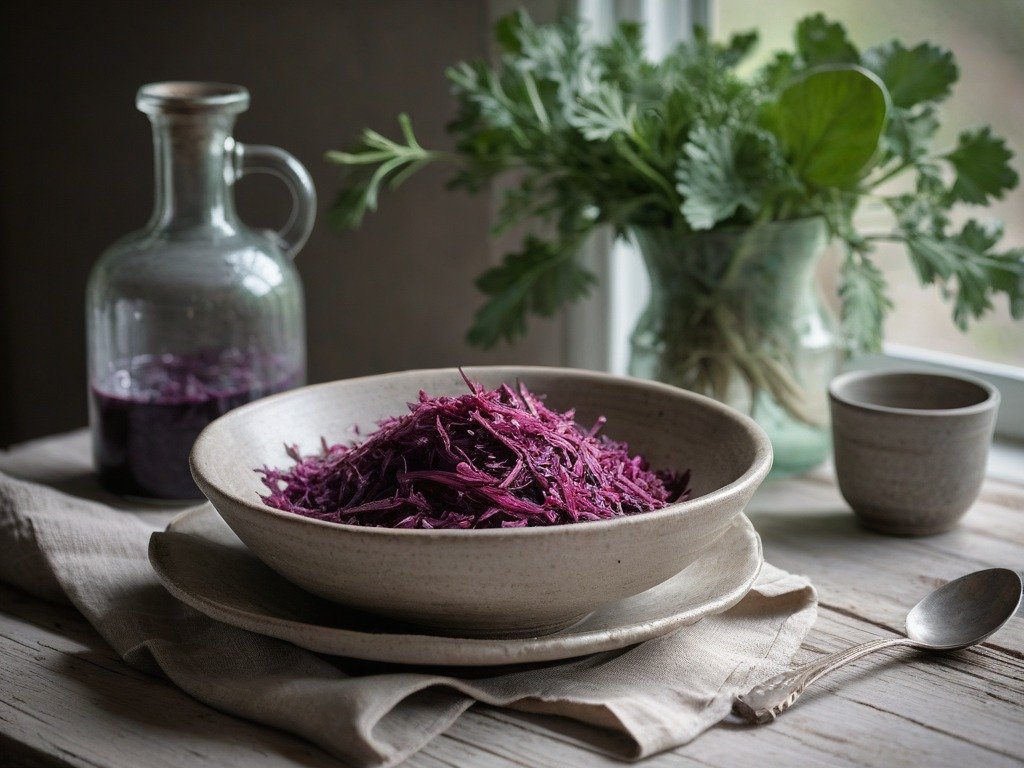
Adapted from TheMealDB
Ingredients
Affiliate Product links go to Amazon. As an Amazon Associate, Captain Rico earns from qualifying purchases.
- 11¼ oz Beetroot
- 1 lb Red Cabbage
- 1 small Onion
- 2 tsp Caraway Seed
- 1 tsp Sea Salt
Method
- Tip all the ingredients into a large bowl, add 1-1½ tsp freshly ground black pepper, then scrunch it all together with your hands for 5 mins.
- You might want to wear gloves to avoid staining your skin with the beetroot juices.
- Press the veg down in the bowl with your hands, then cover the surface and up the side of the bowl with a large sheet of compostable cling film or something reusable like a beeswax wrap.
- Now place another similar-sized bowl on top.
- Press down hard and add anything heavy (packs of rice or cans work well) to weigh it down so the juices rise to cover the surface. Cover again.
- Leave to ferment at room temperature for at least five days, but for maximum flavour, leave for one-five weeks (until the bubbling subsides).
- Check the sauerkraut. After a few days, you will see bubbles that have built up as it ferments.
- Give it a stir, then cover and weigh it down again as before.
- The cabbage will become increasingly sour the longer it’s fermented, so taste it now and again.
- When you like the flavour, transfer it to sterilised jars and keep chilled.
- Will keep chilled for up to six months.
Nutrition per serving (estimated)
- 61 cal
- 2.5g protein
- 0.4g fat
- 13.4g carbs
- 4.6g fiber
- 5.3g sugar
- 67mg sodium
About the ingredients
- Beetroot Beta vulgaris
- Dietary nitrates noted for vascular effects; betalain pigments. Sugar beet is same species but the culinary name beet/beetroot denotes the whole vegetable, not refined sugar.
- Red Cabbage Brassica oleracea
- Leafy biennial vegetable, the densely-layered head of Brassica oleracea (Capitata group), domesticated in Europe over 2,000 years ago. Eaten raw, cooked, or fermented (sauerkraut, kimchi). Low-calorie, rich in vitamin C, vitamin K, and fiber. A whole vegetable—canonical to WFPB.
- Onion Allium cepa
- Bulb vegetable, eaten raw or cooked. Whole minimally-processed plant food; 'organic' refers to cultivation only. WFPB-canonical.
- Caraway Seed Carum carvi
- Technically a schizocarp fruit, called seed culinarily.
- Sea Salt NaCl
- Crystalline sodium chloride, harvested by evaporating seawater or mining rock-salt deposits. Used as seasoning and preservative since antiquity—central to trade and food economies for millennia. A mineral, not a plant food, and a sodium isolate; noncanonical to WFPB.