Algerian Carrots
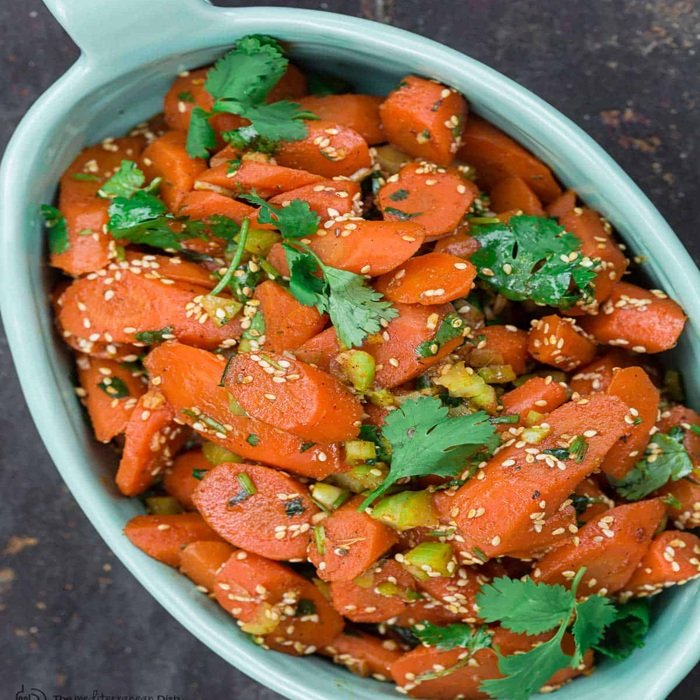
Adapted from TheMealDB
Ingredients
Affiliate Product links go to Amazon. As an Amazon Associate, Captain Rico earns from qualifying purchases.
- 1½ cup Water
- 2 lb Carrots
- 5 Tbsp vegetable broth 🛒
- 1 tsp Salt
- ½ tsp Black Pepper
- ½ tsp Ground Cinnamon
- ½ tsp Ground Cumin
- 3 clove Garlic
- ½ tsp Thyme
- 1 Bay Leaf
- 1 tsp Lemon Juice
Method
- Place a steamer insert into a saucepan, and fill with 1 1/2 cups of water, or just below the bottom of the steamer.
- Cover, and bring the water to a boil over high heat.
- Add the sliced carrots, reduce the heat to medium, and cover the pan again.
- Steam until tender but not mushy, 4 to 6 minutes depending on the thickness of the slices.
- Reserve 1/2 cup of the cooking liquid.
- Heat the vegetable broth in a skillet over medium heat.
- Reduce the heat to low and stir in the salt, pepper, cinnamon, cumin, garlic, and thyme.
- Cook the spices and garlic, stirring frequently, until fragrant, about 10 minutes.
- Add the 1/2 cup reserved cooking liquid and the bay leaf, cover, and simmer for 20 minutes.
- Stir in the carrots, tossing well to coat with the spice mixture, and cook until heated through, about 2 to 3 minutes.
- Sprinkle with lemon juice and remove the bay leaf before serving.
Nutrition per serving (estimated)
- 21 cal
- 0.5g protein
- 0.1g fat
- 4.9g carbs
- 1.4g fiber
- 2.3g sugar
- 40mg sodium
About the ingredients
- Water
- Plain potable water (H2O). Universal solvent and culinary base, no calories or nutrients beyond trace minerals. Not derived from any organism; an unprocessed essential. WFPB canonical.
- Carrots Daucus carota
- Whole taproot, eaten raw or cooked. Orange domesticated form is the familiar one; heirloom landraces range purple to white.
- vegetable broth
- A salt-free, all-purpose vegetable broth. Onion, carrots, celery, garlic, tomatoes, mushrooms, kombu, parsley.
- Salt NaCl
- Crystalline sodium chloride, harvested by evaporating seawater or mining rock-salt deposits. Used as seasoning and preservative since antiquity—central to trade and food economies for millennia. A mineral, not a plant food, and a sodium isolate; noncanonical to WFPB.
- Black Pepper Piper nigrum
- Dried unripe fruit (peppercorns) of the pepper vine, used whole or ground. A whole dried spice with nothing added or extracted. Canonical WFPB aromatic.
- Ground Cinnamon Cinnamomum cassia
- High coumarin (hepatotoxic at chronic high dose) distinguishes cassia from Ceylon; relevant for dose, not WFPB status.
- Ground Cumin Cuminum cyminum
- Dried seeds of Cuminum cyminum, an apiaceous herb. Whole spice, mechanically harvested and dried; matrix intact whether whole or ground. Canonical whole-plant seed spice.
- Garlic Allium sativum
- Garlic itself is canonical, but extract denotes a concentrated/isolated derivative outside the whole-food canon. Marketed as natural/healthy supplement, hence mistaken-as-WFPB flag.
- Thyme Thymus vulgaris
- Fresh or dried leaf+tender stem. Bare name is the herb, not the distilled essential oil.
- Bay Leaf Laurus nobilis
- Bay leaf: aromatic leaf of the laurel tree Laurus nobilis, native to the Mediterranean and prized since antiquity (Greek/Roman symbolism). Used whole, dried or fresh, to infuse dishes then removed. Contains essential oils (eucalyptol). A whole dried herb/leaf. Canonical WFPB.
- Lemon Juice Citrus limon
- Lemon is the acidic tree fruit (hesperidium) of Citrus limon, a Rutaceae shrub of likely Northeast Indian origin. Eaten as fresh fruit, juice, and zest. Rich in vitamin C, citric acid, flavonoids. Whole fruit and its fresh juice are canonical WFPB foods.