Garlic Cashew Alfredo
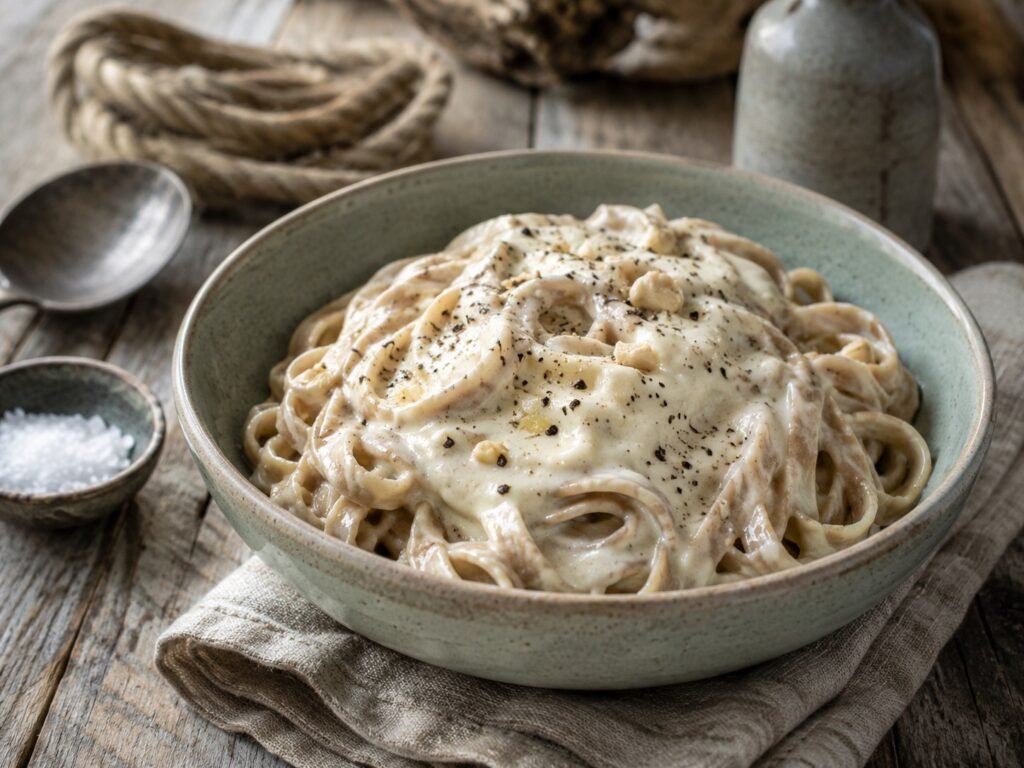
Eight ingredients, ten minutes, one blender. This creamy alfredo gets its body from soaked cashews and slowly-cooked onion. No dairy, no oil, nothing extracted. Toss it over whole-grain pasta or pour it over roasted vegetables and you have weeknight dinner sorted.
Ingredients
Affiliate Product links go to Amazon. As an Amazon Associate, Captain Rico earns from qualifying purchases.
- 1 medium white onion , diced (~1 1/2 cups)
- 1-2 cups low sodium vegetable broth 🛒 , divided; 240-480g
- 1/2-3/4 tsp salt
- 1/4-1/2 tsp ground black pepper
- 4 x-large minced garlic cloves
- ½ cup raw unsalted cashews , heaping; see soaking note below
- 1/2-1 Tbsp lemon juice , start with just 1/2 and taste after blended!
- 2 Tbsp nutritional yeast
Method
- Add the diced onion and 1 cup of the water to a wide pan over medium-high heat. Cook for about 8 minutes, stirring occasionally, until the onion is fully soft and the pan is dry. Stir in the garlic and cook 1–2 more minutes. By the time the garlic is fragrant, all of the water should have evaporated; reduce heat if the onions are browning instead of softening. You want sweet, jammy onions. Not seared ones.
- Transfer the onion-garlic mixture to a blender. Add the cashews, ½ cup of the remaining water, ½ tablespoon lemon juice, 2 tablespoons nutritional yeast, salt, and pepper. Blend on high for 1–2 minutes until completely smooth and creamy. Taste it: add more water for a thinner sauce, more lemon for brightness, more yeast for a cheesier finish.
- Serve over your favorite whole-grain pasta. Top with fresh parsley, a little lemon zest, or any roasted vegetable you have on hand. The sauce thickens as it cools; loosen leftovers with a splash of water when reheating.
Nutrition per serving (estimated)
- 355 cal
- 12.2g protein
- 18.8g fat
- 38.3g carbs
- 8.9g fiber
- 8g sugar
- 472mg sodium
About the ingredients
- medium white onion Allium cepa
- Bulb vegetable, eaten raw or cooked. Whole minimally-processed plant food; 'organic' refers to cultivation only. WFPB-canonical.
- low sodium vegetable broth
- A salt-free, all-purpose vegetable broth. Onion, carrots, celery, garlic, tomatoes, mushrooms, kombu, parsley.
- salt NaCl
- Crystalline sodium chloride, harvested by evaporating seawater or mining rock-salt deposits. Used as seasoning and preservative since antiquity—central to trade and food economies for millennia. A mineral, not a plant food, and a sodium isolate; noncanonical to WFPB.
- ground black pepper Piper nigrum
- Dried unripe fruit (peppercorns) of the pepper vine, used whole or ground. A whole dried spice with nothing added or extracted. Canonical WFPB aromatic.
- x-large minced garlic cloves Allium sativum
- Garlic itself is canonical, but extract denotes a concentrated/isolated derivative outside the whole-food canon. Marketed as natural/healthy supplement, hence mistaken-as-WFPB flag.
- raw unsalted cashews Anacardium occidentale
- Cashew is botanically a drupe seed (accessory fruit pseudocarp), commonly called nut. Roasting is required to destroy urushiol in shell — no edible raw cashew tradition. Name-literal: no additives.
- lemon juice Citrus limon
- Lemon is the acidic tree fruit (hesperidium) of Citrus limon, a Rutaceae shrub of likely Northeast Indian origin. Eaten as fresh fruit, juice, and zest. Rich in vitamin C, citric acid, flavonoids. Whole fruit and its fresh juice are canonical WFPB foods.
- nutritional yeast Saccharomyces cerevisiae
- Nutritional yeast is deactivated Saccharomyces cerevisiae grown on a sugar medium, harvested, washed, and dried into flakes. The whole yeast cells stay intact (not an isolate). Rich in B-vitamins and complete protein; often fortified with B12. As a whole deactivated fungus, it is WFPB-canonical.