Smoky Lentil Chili with Squash
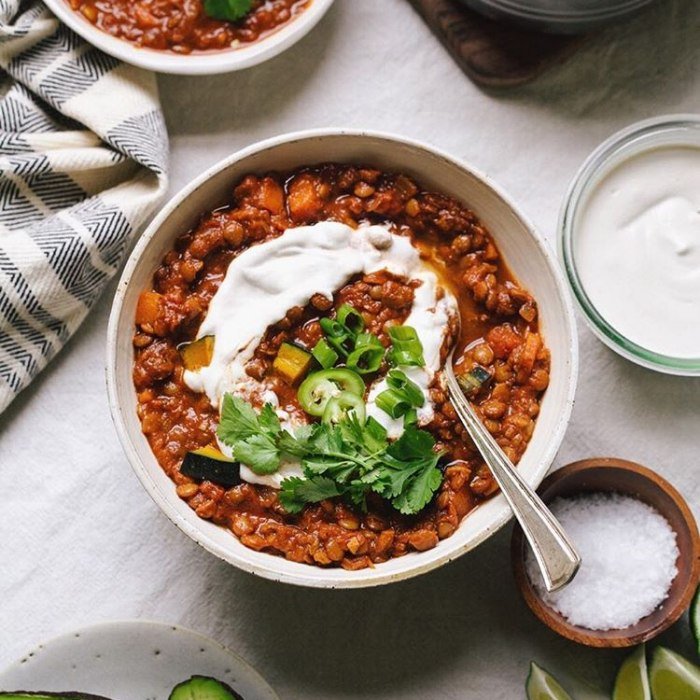
Adapted from TheMealDB
Ingredients
Affiliate Product links go to Amazon. As an Amazon Associate, Captain Rico earns from qualifying purchases.
- 1 tbls vegetable broth 🛒
- 1 Onion
- 1 chopped Leek
- 3 clove Garlic
- 4 tsp Cumin
- 2 tsp Coriander
- 1 tsp Smoked Paprika
- ½ tsp Cinnamon
- 1 tsp Chili Powder
- 1 tsp Cocoa
- ½ tsp Dried Oregano
- 1 can Diced Tomatoes
- 3 cup Water
- 3 chopped Carrots
- 1½ cup Brown Lentils
- 1 tsp Sea Salt
- 1 Small Squash
- 1 cup Cashews
- 1 tsp Apple Cider Vinegar
Method
- Begin by roasting the squash.
- Slice it into thin crescents and drizzle with a little vegetable broth and sprinkle with sea salt.
- I added a fresh little sage I had in the fridge, but it’s unnecessary.
- Roast the squash a 400°F (400 F) for 20-30 minutes, flipping halfway through, until soft and golden. (WFPB: roast on parchment without oil; mist with broth if sticking)
- Let cool and chop into cubes.
- Meanwhile, rinse the lentils and cover them with water.
- Bring them to the boil then turn down to a simmer and let cook (uncovered) for 20-30 minutes, or until tender. Drain and set aside.
- While the lentils are cooking heat the 1 Tbsp. of vegetable broth on low in a medium pot.
- Add the onions and leeks and sauté for 5 or so minutes, or until they begin to soften.
- Add the garlic next along with the cumin and coriander, cooking for a few more minutes.
- Add the remaining spices – paprika, cinnamon, chilli, cocoa, Worcestershire sauce, salt, and oregano.
- Next add the can of tomatoes, the water or stock, and carrots.
- Let simmer, covered, for 20 minutes or until the veg is tender and the mixture has thickened up.
- You’ll need to check on the pot periodically for a stir and a top of of liquid if needed.
- Add the lentils and chopped roasted squash.
- Let cook for 10 more minutes to heat through.
- Serve with sliced jalapeno, lime wedges, cilantro, green onions, and cashew sour cream. SIMPLE CASHEW SOUR CREAM
- Cup Raw Unsalted Cashews Pinch Sea Salt
- tsp. Apple Cider Vinegar Water Bring some water to the boil, and use it to soak the cashews for at least four hours.
- Alternatively, you can use cold water and let the cashews soak overnight, but I’m forgetful/lazy, so often use the boil method which is much faster.
- After the cashews have soaked, drain them and add to a high speed blender.
- Begin to puree, slowly adding about 1/2 cup fresh water, until a creamy consistency is reached.
- You may need to add less or more water to reach the desired consistency.
- Add a pinch of sea salt and vinegar (or lemon juice).
Nutrition per serving (estimated)
- 104 cal
- 5g protein
- 3.8g fat
- 13.9g carbs
- 2.4g fiber
- 1.5g sugar
- 15mg sodium
About the ingredients
- vegetable broth
- A salt-free, all-purpose vegetable broth. Onion, carrots, celery, garlic, tomatoes, mushrooms, kombu, parsley.
- Onion Allium cepa
- Bulb vegetable, eaten raw or cooked. Whole minimally-processed plant food; 'organic' refers to cultivation only. WFPB-canonical.
- Leek Allium ampeloprasum
- Plant part is a bundle of tightly rolled leaf sheaths (pseudostem); tagged stem as closest enum value.
- Garlic Allium sativum
- Garlic itself is canonical, but extract denotes a concentrated/isolated derivative outside the whole-food canon. Marketed as natural/healthy supplement, hence mistaken-as-WFPB flag.
- Cumin Cuminum cyminum
- Dried seeds of Cuminum cyminum, an apiaceous herb. Whole spice, mechanically harvested and dried; matrix intact whether whole or ground. Canonical whole-plant seed spice.
- Coriander Coriandrum sativum
- Botanically a schizocarp (split fruit), culinarily called seed — hence botanical/culinary mismatch true.
- Smoked Paprika Capsicum annuum
- Ground dried sweet red peppers smoked over oak. Whole-fruit spice (fruit/pericarp), only smoked, dried, milled. Rich in vitamin A, carotenoids, vitamin E. Smoking and grinding are traditional methods; no additions. Canonical WFPB spice.
- Cinnamon Cinnamomum cassia
- High coumarin (hepatotoxic at chronic high dose) distinguishes cassia from Ceylon; relevant for dose, not WFPB status.
- Chili Powder Capsicum annuum
- Chili powder: in US usage, a ground blend of dried chili peppers (Capsicum annuum) with cumin, oregano, garlic powder, and often salt; elsewhere it means pure ground dried chili. New World crop, central to post-Columbian global cuisine. Sun-dried and milled whole pods. Canonical WFPB (blends may add salt).
- Cocoa Theobroma cacao
- Ground roasted, defatted seeds of the cacao tree (cocoa powder). Minimally processed plant food retaining fiber and flavanols, rich in magnesium and iron. Canonical WFPB when unsweetened; sugar/alkalization are separate additions. Deforestation/labor concerns noted.
- Dried Oregano Origanum vulgare
- Mediterranean oregano = Origanum vulgare; Mexican oregano = Lippia graveolens (Verbenaceae). Name covers multiple species but all are whole-leaf herbs, so verdict unaffected.
- Diced Tomatoes Solanum lycopersicum
- Tomatoes mechanically cut into cubes, typically canned in tomato juice. A whole-food fruit product with minimal processing; matrix largely intact. Canonical to WFPB when packed without added oil/sugar.
- Water
- Plain potable water (H2O). Universal solvent and culinary base, no calories or nutrients beyond trace minerals. Not derived from any organism; an unprocessed essential. WFPB canonical.
- Carrots Daucus carota
- Whole taproot, eaten raw or cooked. Orange domesticated form is the familiar one; heirloom landraces range purple to white.
- Brown Lentils Lens culinaris
- Common whole brown lentils — small dried legume seeds that cook quickly without soaking, holding shape for stews and dals. High in protein, fiber, folate, and iron. Whole legume — WFPB canonical.
- Sea Salt NaCl
- Crystalline sodium chloride, harvested by evaporating seawater or mining rock-salt deposits. Used as seasoning and preservative since antiquity—central to trade and food economies for millennia. A mineral, not a plant food, and a sodium isolate; noncanonical to WFPB.
- Squash Cucurbita
- Squash, the edible fruit of Cucurbita species (e.g., C. pepo, C. moschata, C. maxima). Includes summer and winter types eaten whole, cooked or raw. Low-to-medium calorie, rich in vitamin A (beta-carotene), vitamin C, potassium, fiber intact. A whole plant food: canonical.
- Cashews Anacardium occidentale
- Cashew is botanically a drupe seed (accessory fruit pseudocarp), commonly called nut. Roasting is required to destroy urushiol in shell — no edible raw cashew tradition. Name-literal: no additives.
- Apple Cider Vinegar Malus domestica
- Vinegar from apple juice double-fermented: sugars to alcohol, then alcohol to acetic acid by Acetobacter. Raw/unfiltered versions retain the 'mother.' A whole-fruit-derived acid used for brightness; no added oil/sugar. Canonical traditional ferment.